
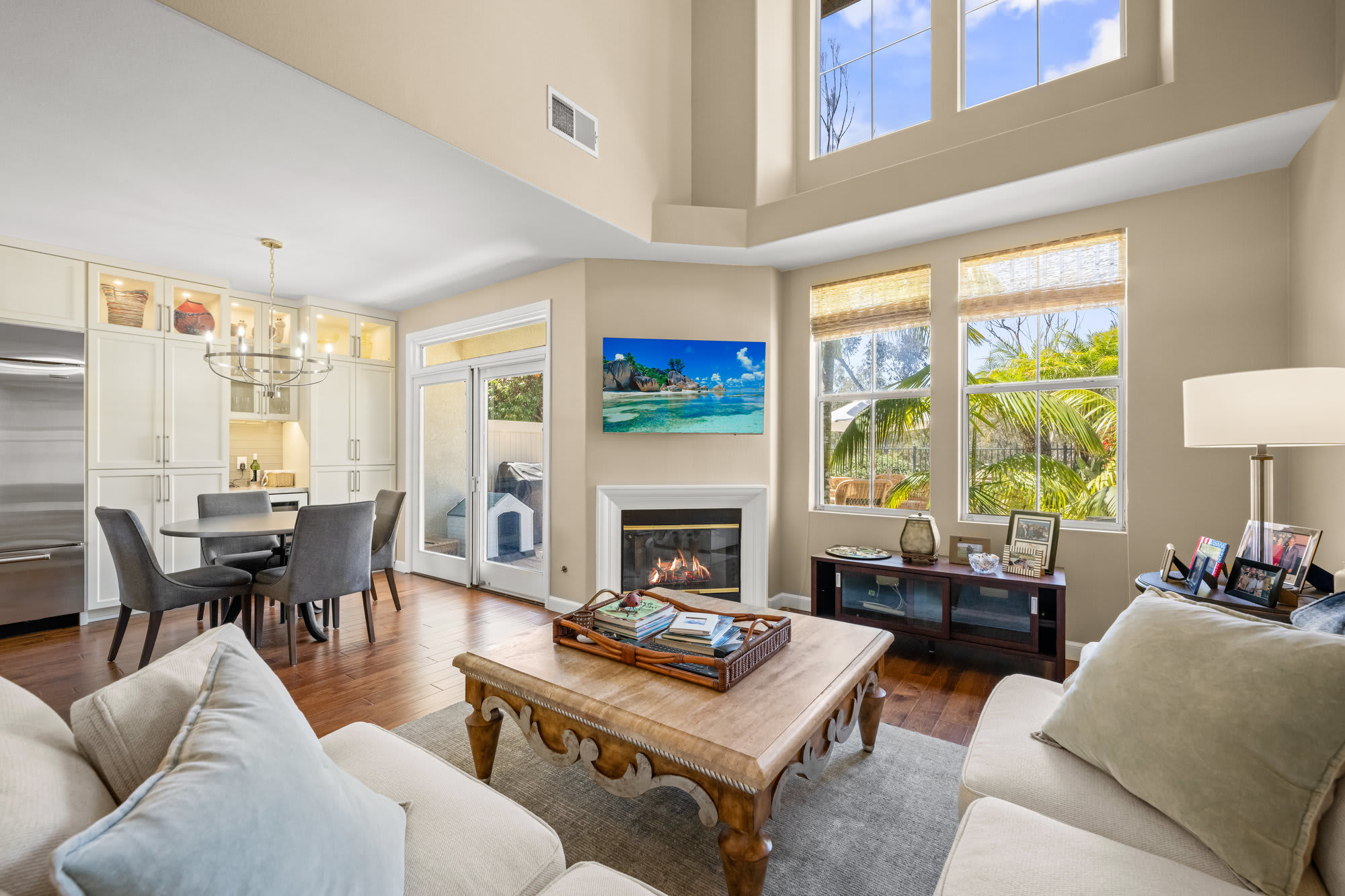

What do second-home buyers need to know before purchasing in Oceanside, CA?
Oceanside offers one of the lowest median sale prices among North County San Diego's coastal communities, a genuine beach-and-harbor lifestyle, and real short-term rental demand. But before you fall in love with a listing, you need to nail down three things: whether the specific property is eligible for your intended use, what coastal ownership actually costs to maintain, and how the local STR rules apply to that exact parcel. Get those right and Oceanside makes a compelling case. Miss one and you could be holding a property that can't legally do what you bought it for.
Key Takeaways
- Oceanside's median sale price is $865,000 with a median of 24 days on market, making it the most accessible coastal entry point in North County San Diego among the tracked areas.
- New non-hosted short-term rentals are prohibited outside the Coastal Zone in Oceanside, a restriction that took effect February 10, 2024, per the City of Oceanside.
- STR eligibility is parcel-specific, not neighborhood-wide: zoning designation, Coastal Zone location, hosted vs. non-hosted classification, and ADU permit history all matter.
- Properties with an ADU or JADU permitted on or after September 9, 2017, cannot use the ADU, JADU, or primary residence as a short-term rental.
- Coastal hazard exposure, insurance availability, and recurring salt-air maintenance are ownership costs that belong in your budget before you make an offer.
How does Oceanside compare to other North County San Diego coastal markets?
Oceanside's $865,000 median is a meaningful gap below its neighbors. That price point draws second-home buyers who want coastal access without the premium attached to Encinitas or Del Mar. Here's how the markets stack up on recent data.
| Area | Median Sale Price | Median Days on Market |
|---|---|---|
| Encinitas | $2,205,500 | 43 |
| Carlsbad | $1,475,000 | 32 |
| Solana Beach | $2,200,000 | 46 |
| Del Mar | $3,900,000 | 44 |
| Oceanside | $865,000 | 24 |
| Rancho Santa Fe | $5,000,000 | 56 |
Oceanside also moves faster than most. At 24 median days on market, inventory doesn't sit. With 355 active listings and 155 new listings in the last 30 days, there's selection, but well-priced properties don't wait around. That pace matters when you're buying from out of town or coordinating around a primary home sale.
If you're comparing Oceanside to Carlsbad as a second-home option, I've written about what makes Carlsbad Village a compelling second-home market as well. The two cities serve different buyer priorities, and knowing the difference saves time.
What are the short-term rental rules for Oceanside second homes?
This is the question I spend the most time on with second-home buyers in Oceanside, and for good reason. The rules are real, they're enforced, and they vary by exact property location in ways that can completely change your investment thesis.
The core rule: STR eligibility is parcel-specific, not neighborhood-wide
Per the City of Oceanside, an STR permit is required for all short-term rental properties. But whether you can get one depends on where the property sits, how it's zoned, and whether you're operating a hosted or non-hosted rental.
The biggest constraint: new non-hosted STRs (whole-home vacation rentals where you're not present) are prohibited outside the Coastal Zone, a rule that took effect February 10, 2024. That's not a minor footnote. It means a property a few blocks east of Coast Highway may be completely off the table for Airbnb-style use, while a comparable property west of it could qualify. You need to verify the exact parcel, not assume based on the neighborhood.
For properties west of Coast Highway, the city's STR permit update page confirms that new permits must be in eligible residential zones, with additional restrictions on new non-hosted permits. R-1 zoned properties face further limitations regardless of their Coastal Zone location.
ADU and JADU owners: read this carefully
If the property you're considering has an ADU or JADU that was permitted on or after September 9, 2017, the city prohibits using the ADU, JADU, or the primary residence as a short-term rental. This catches a lot of buyers off guard, especially with the surge in ADU construction over the past several years. Before you make an offer on any property with an accessory unit, pull the permit history and confirm the STR status with the city directly.
Don't assume an existing rental history transfers
Ask the seller for the city STR permit, renewal records, violation history, and tax-registration documentation. The city distinguishes between existing and new permits, and a prior owner's operating history doesn't automatically pass to you at close. This is a due-diligence item that belongs on your checklist before you're in contract, not after.
What else should a second-home buyer evaluate before making an offer?
Clarify your intended use model first
There are three distinct ways to own a second home in Oceanside: personal use only, long-term rental, and permitted short-term rental. Each carries different implications for furnishing costs, property management, wear and tear, insurance, tax treatment, and vacancy. They're not interchangeable, and the right property for one model may be the wrong property for another.
I always walk my clients through this before we start touring. A home near the harbor or pier that's perfect for personal weekends may have HOA restrictions or zoning that rules out short-term rental entirely. A property that pencils as a long-term rental may be farther from the beach than you'd want for personal use. Settling on your primary goal early keeps you from falling for a property that can't do what you need it to do.
Oceanside's visitor economy is real. The city's Sustainable Tourism Master Plan documented more than $568 million in visitor spending in 2022 and more than 3,500 tourism-related jobs. That underlying demand is part of what makes STR-eligible properties attractive. But projected rental returns need to come from property-specific evidence, not generic Oceanside averages, because the rules vary too much parcel to parcel for a blanket estimate to be reliable.
Screen the HOA before you screen the property
If you're looking at a condo or planned development, the HOA's CC&Rs can override city permission entirely. A property can be in a Coastal Zone-eligible location with a clean permit history, and the HOA can still prohibit transient or short-term rentals. Review the CC&Rs, rental minimums, guest policies, parking requirements, owner-occupancy provisions, reserve fund health, and special assessment history before you spend time evaluating the unit itself. A poorly funded HOA reserve is a financial risk that doesn't show up in the listing price.
Get an insurance quote before you're in contract
Coastal properties in California carry insurance considerations that inland buyers don't face. Salt air, wind exposure, flood zone designation, and erosion risk all affect what's available and at what cost. The city's own tourism planning documents identify shoreline and climate-related risks as material concerns. Get an insurance quote for the specific address early in your due diligence, not as an afterthought. A property that looks affordable at purchase can look very different once you price the coverage.
Oceanside's climate is genuinely mild, with Visit Oceanside reporting an average annual high of 66°F, an average low of 53.9°F, and about 10 inches of annual rainfall. But mild climate doesn't mean zero maintenance. Salt-air corrosion, exterior paint, metal fixtures, roofing, drainage, and HVAC equipment all require recurring attention on beach-area properties. Build that into your ownership budget from the start.
For a deeper look at what makes Oceanside's coastal market distinct, I've also written about what sets Oceanside apart as a coastal lifestyle market. And if you're weighing Oceanside against Cardiff-by-the-Sea for a second home, the Cardiff second-home considerations are worth reading alongside this one.
The right Oceanside second home is out there, but the parcel-specific nature of the STR rules, HOA variation, and coastal insurance landscape means the due-diligence process here is more detailed than a typical purchase. That's exactly the kind of thing I walk my clients through before we write an offer. If you want to run through your specific situation, I'm glad to help.
Read what past clients have said about working with me on Google before you reach out.
Frequently Asked Questions
Can I legally use an Oceanside second home as an Airbnb or vacation rental?
It depends on the specific parcel, its zoning, and whether it falls within the Coastal Zone. New non-hosted short-term rentals are prohibited outside the Coastal Zone as of February 10, 2024, per the City of Oceanside. Verify the exact address's eligibility with the city before making an offer, because neighborhood-level assumptions are not reliable.
Are short-term rentals allowed east of Coast Highway in Oceanside?
New non-hosted STRs are prohibited east of the Coastal Zone boundary, which generally falls near Coast Highway. Hosted rentals (where the owner is present) may have different eligibility, but the rules are complex and property-specific. The city's STR permit update page is the controlling source, and I'd recommend confirming directly with the city for any specific address you're considering.
Does an Oceanside property with an ADU qualify for short-term rental use?
Not automatically. Properties with an ADU or JADU permitted on or after September 9, 2017, cannot use the ADU, JADU, or the primary residence as a short-term rental under current city rules. Pull the permit history for any property with an accessory unit and verify the STR status with the city before assuming rental eligibility.
What should I check in an Oceanside HOA before buying a vacation property?
Review the CC&Rs for any language prohibiting transient or short-term rentals, rental minimums, guest restrictions, and owner-occupancy requirements. City permit eligibility does not override a private HOA prohibition, so a property can be in a legally permissible STR zone and still be off-limits under the HOA's rules. Also check the reserve fund health and any pending special assessments, which are financial risks that don't appear in the listing price.
How do coastal hazards and insurance affect buying a second home in Oceanside?
Flood zone designation, erosion exposure, and salt-air conditions can meaningfully affect both insurance availability and ongoing maintenance costs for beach-area properties. Get an insurance quote for the specific address early in due diligence, before you're committed to the purchase. The city's Sustainable Tourism Master Plan identifies shoreline and climate-related risks as material concerns for coastal property owners.
Oceanside's combination of relative affordability, coastal access, and genuine visitor demand makes it one of the more interesting second-home markets in North County. The due diligence is more layered than a typical purchase, but that's exactly where local expertise pays off. Schedule a consultation and let's work through your specific situation together.
About Loren Sanders
Loren Sanders is a Compass real estate agent serving North County San Diego's coastal communities, drawing on 34 years of experience to help both buyers and sellers navigate the market with patience, professionalism, and clear communication.
Compass · 760-583-7100
Equal Housing Opportunity. Loren Sanders, Compass MLS ID #694510, licensed by the California Department of Real Estate. This article is general information only, not legal, tax, or financial advice. Confirm your own numbers with your closing agent, tax advisor, or lender.